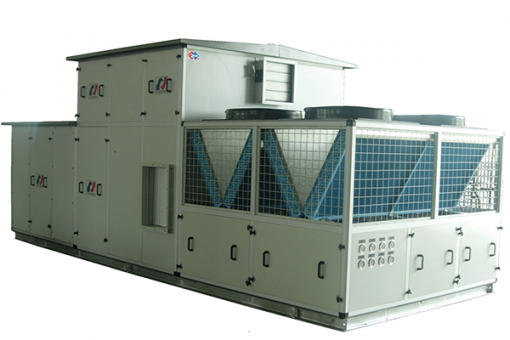
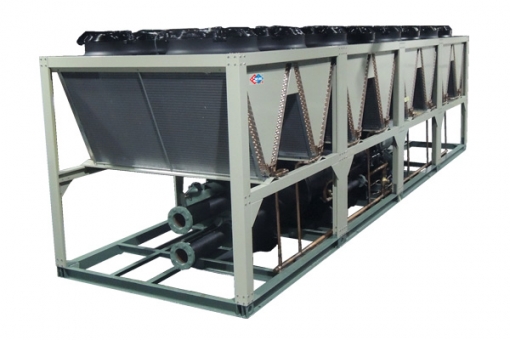
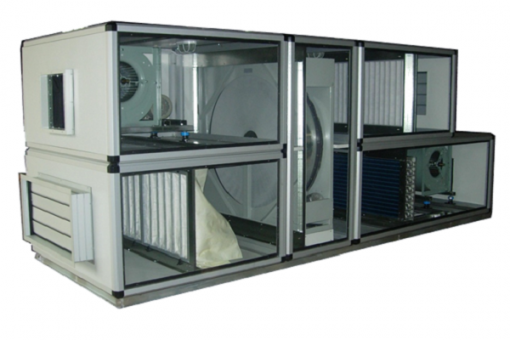
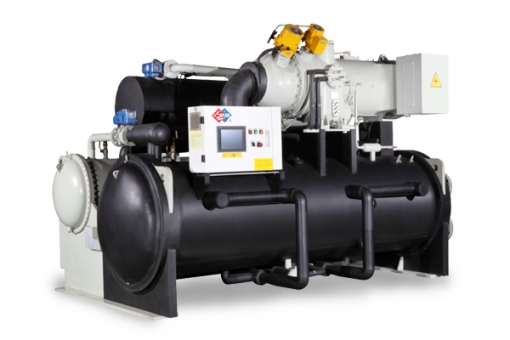
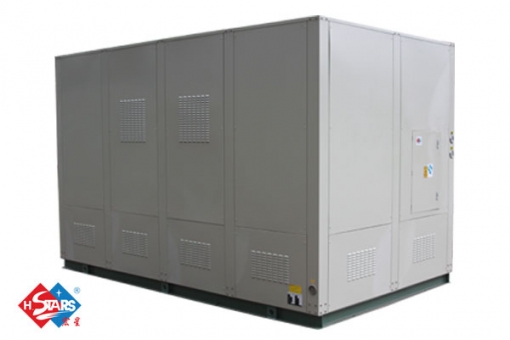
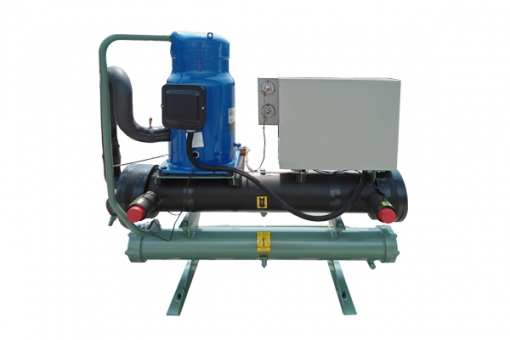
In industrial and scientific testing, precise temperature control is critical. For a gas meter module test project, the challenge was clear: create two temperature-controlled rooms, one at 5℃ and another at 38℃, to run 4-hour methane-filled tests under strict stability and safety standards. Instead of relying on two separate systems, H.Stars delivered an integrated solution with a single hot-and-cold supply unit.
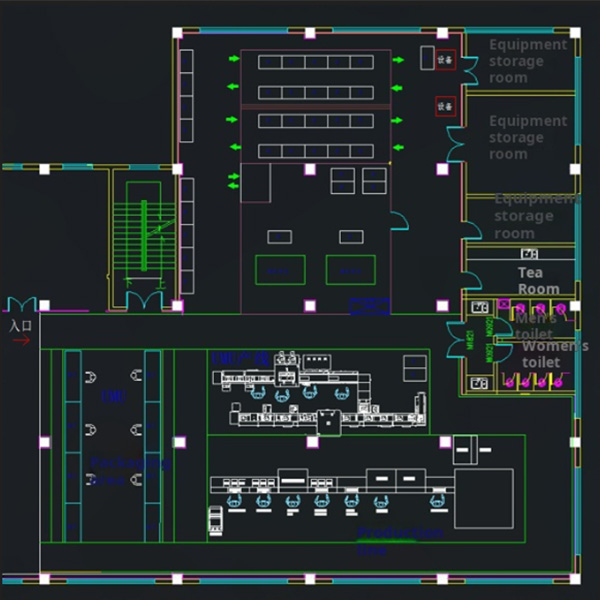
Project Requirements
Test Needs:
• One 5℃ constant-temperature room
• One 38℃ constant-temperature room
• Test modules placed in sealed boxes, inside methane-filled test rooms
Temperature Control:
• Fluctuation: ±0.5℃
• Uniformity: ±1℃
• Heating rate: reach target in 30 minutes (no load)
Control System:
• Energy-saving water circulation design: cooling at 5℃ recycles heat for 38℃ heating
• At least 4 monitoring probes to ensure temperature uniformity, with separate control and monitoring sensors
• Large circulation fans evenly distributed for stable internal airflow
Safety Measures:
• Explosion-proof equipment for lights and electrical components inside the test rooms
System Configuration
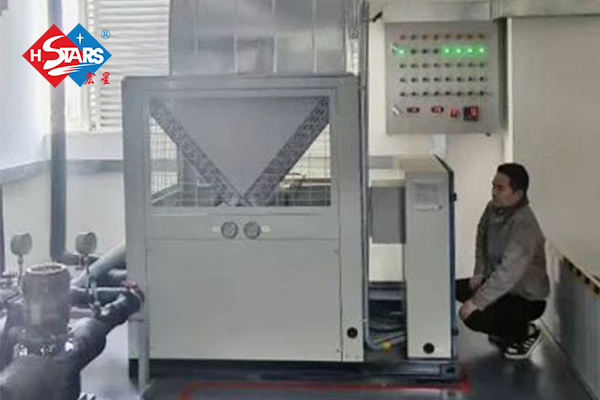
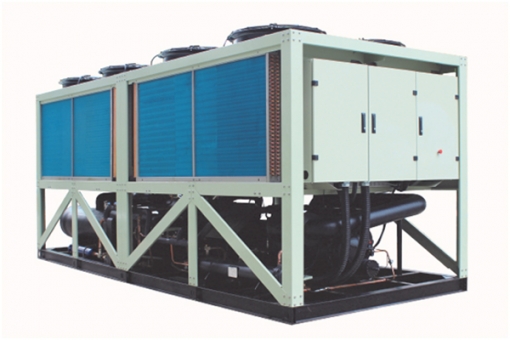
• Hot-and-cold supply unit: 1 set (Cooling capacity: 17.4 kW / Heating capacity: 24 kW)
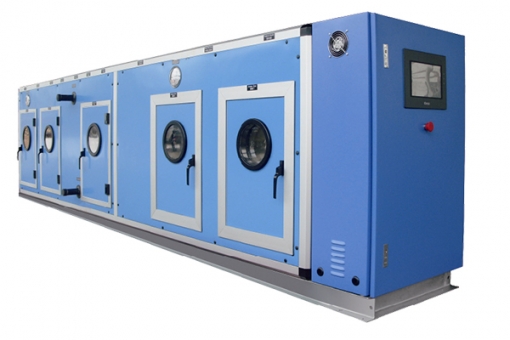
• Ceiling-type air coolers: 4 sets
• Chilled water pumps: 2 sets
• Hot water pumps: 2 sets
Advantages of the H.Stars Solution
1. Dual-function in one unit – One machine simultaneously provides cooling and heating, meeting both lab needs.
2. Stable water system – Buffer tank with proportional-integral valve ensures precise temperature stability.
3. Backup heating – Electric heater prevents low-load winter issues.
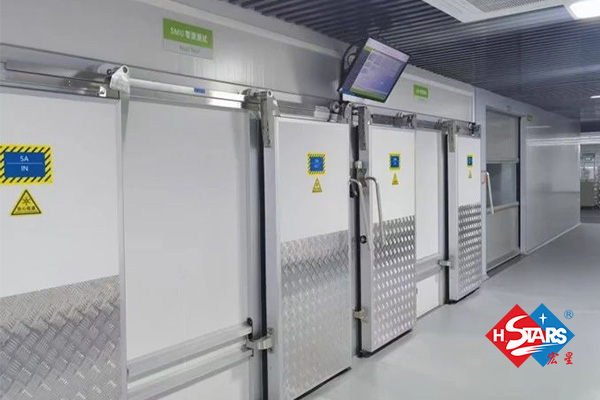
4. Space-saving design – Special cold room doors share tracks, solving installation constraints.
5. Smart automation – Advanced H.Stars control ensures precise and stable lab conditions.
6. Lower maintenance – Refrigerant centralized in one unit, with smaller charge, reduced leak risk, and lower long-term costs compared to multi-split systems.
Conclusion
With H.Stars’ hot-and-cold integrated system, a single solution can achieve both 5℃ cooling and 38℃ heating, providing precise, safe, and energy-efficient temperature control for dual-condition experiments. This innovative design not only reduces equipment costs but also ensures long-term reliability and ease of maintenance.