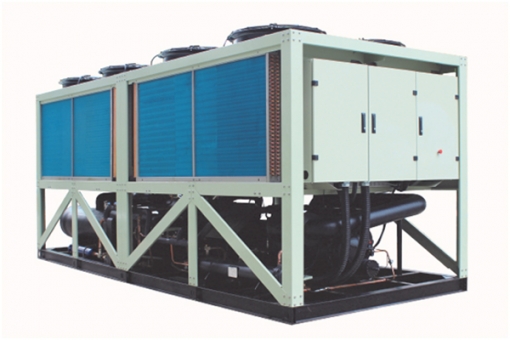
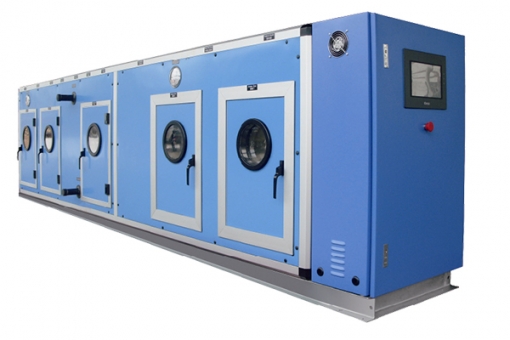
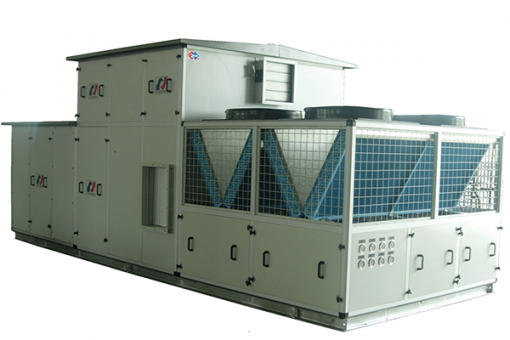
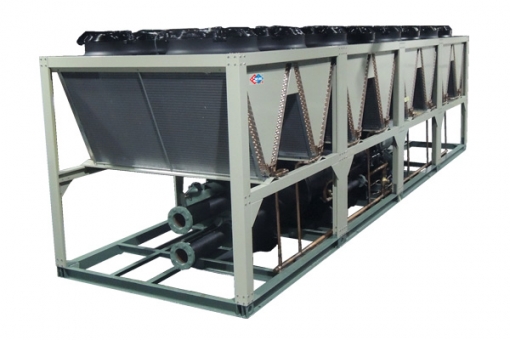
Milk cooling is a critical step in dairy processing because it directly affects freshness, shelf life, and the quality of subsequent dairy products. The key requirements are rapid cooling, precise temperature control, hygienic operation, and stable continuous performance.
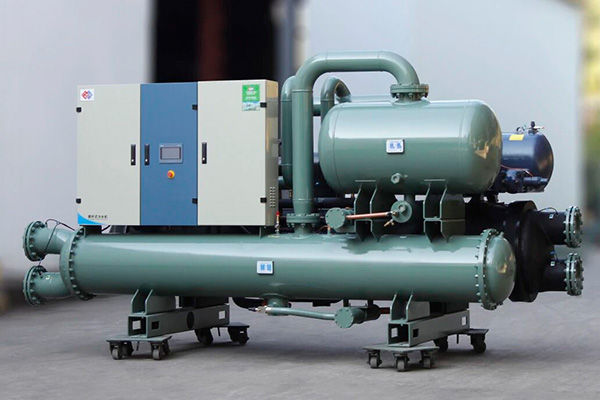
Thanks to their high heat-exchange efficiency and fast cooling capability, spray-type chillers have become one of the most widely used cooling solutions in dairy processing. However, to meet food-grade production standards, these systems must satisfy several strict technical requirements to avoid product contamination, quality degradation, or production interruptions.
1. Precise Temperature Control and Rapid Cooling
Immediately after milking, fresh milk must be cooled from approximately 37 °C to below 4 °C within two hours. Rapid cooling prevents the growth of microorganisms such as E. coli and lactic acid bacteria, preserving both nutritional value and flavor.
To achieve this, spray-type chillers must provide:
• High refrigeration capacity for fast temperature reduction
• Uniform heat exchange through a spray cooling system
• Temperature control accuracy within ±0.5 °C
During operation, the chiller should dynamically adjust its cooling output:
• Initial stage: deliver higher cooling capacity for rapid temperature drop
• Final stage: precisely maintain the target temperature
This prevents overcooling that could cause milk freezing, which may damage milk fat structures and negatively affect product quality.
2. Food-Grade Hygiene and Safety Standards
Hygiene is a non-negotiable requirement in dairy processing. Even though spray chillers usually cool the medium indirectly, contamination in the cooling circuit can still affect product safety.
To meet food-grade standards, spray-type chillers should include:
• 316L food-grade stainless steel piping and heat exchange components
• Smooth internal surfaces without dead corners to prevent bacterial growth
• No risk of heavy metal contamination
• A fully enclosed spray and water circulation system to prevent dust or microbial contamination
In addition, the system must support CIP (Clean-In-Place) cleaning processes, allowing:
• Acid and alkaline cleaning cycles
• High-temperature sterilization
• Complete removal of residues inside pipes
This ensures compliance with hygiene regulations such as GB 14881 – General Hygienic Regulation for Food Production.
3. Anti-Scaling and Corrosion-Resistant Design
During milk cooling, the cooling medium—usually clean water or food-grade coolant—may produce mineral scale due to temperature fluctuations. Scale accumulation on spray nozzles and heat exchanger surfaces can significantly reduce heat transfer efficiency or even cause blockages.
Therefore, spray-type chillers should feature:
• Anti-clogging spray nozzles
• Optimized spray distribution structure
• Water softening and filtration systems to minimize scale formation
In cases where acidic cooling fluids are used, the chiller must also provide:
• Corrosion-resistant housings and pipelines
• Passivated welding seams to form protective layers
• Long-term structural stability against corrosion
4. High Operational Stability for Continuous Production
Most dairy processing plants operate 24/7 continuous production, meaning any cooling system failure could lead to large losses of raw milk.
To ensure reliable operation, spray chillers should include:
• High-reliability compressors and pumps designed for frequent start-stop cycles
• Intelligent fault detection and alarm systems
• Real-time monitoring of temperature, pressure, and flow
If abnormalities occur, the system should automatically trigger alarms or switch to backup modes to prevent production disruption.
Additionally, dairy processing facilities require low environmental interference:
• Operating noise below 85 dB
• Minimal vibration to protect nearby precision inspection equipment
• Secure pipeline connections to prevent leakage caused by vibration
5. Energy Efficiency and Adaptability to Variable Loads
Milk cooling demand often varies depending on production batches and ambient temperature. Spray-type chillers should therefore support variable load operation, typically through frequency conversion technology.
Benefits include:
• Adjusting cooling capacity according to real-time demand
• Avoiding energy waste from oversized equipment
• Reducing long-term operating costs
Environmental adaptability is also essential:
• Low-temperature start-up capability for northern regions in winter
• Anti-freezing protection for pipelines
• Optimized condenser performance for stable operation during high summer temperatures
Conclusion
A spray-type chiller designed for milk cooling must focus on precise temperature control, hygienic safety, and long-term operational stability, while also delivering energy efficiency and adaptability to varying operating conditions.
When these requirements are fully met, dairy producers can ensure rapid and safe milk cooling, maintain consistent product quality, and achieve reliable, high-efficiency production in modern dairy processing facilities.