The economizer is an important energy-saving component in a spray heat exchange unit. Its sizing directly affects heat transfer efficiency, operating stability, and overall energy consumption. However, for a 540kW spray heat exchange unit, there is no fixed economizer size. The correct specification depends on multiple factors, including operating conditions, refrigerant type, spray system design, and application requirements.
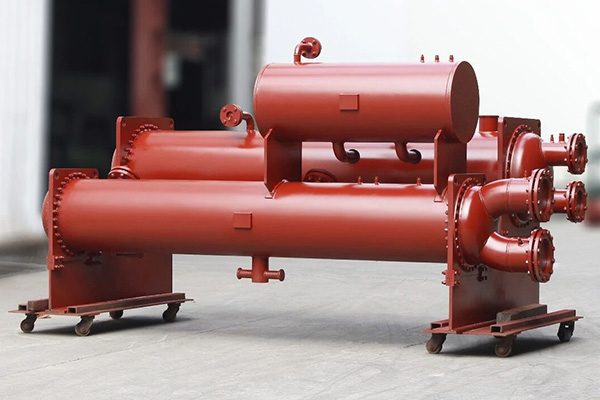
So, how do you determine the right economizer for a 540kW spray heat exchange system?
Why Is an Economizer Important in a Spray Heat Exchange Unit?
The primary function of an economizer is to recover waste heat and optimize refrigerant circulation, helping improve the unit’s COP (Coefficient of Performance) and reduce energy consumption.
For a medium-to-large system such as a 540kW spray heat exchange unit, a properly selected economizer can typically improve energy efficiency by 8%–15%.
The goal of economizer sizing is to match the heat exchange capacity with:
• Refrigerant circulation volume
• Heat recovery demand
• System operating pressure
• Heat transfer requirements
An undersized economizer may result in insufficient heat recovery, while an oversized one may increase resistance, occupy more space, and unnecessarily raise equipment costs.
1. Operating Conditions Determine Economizer Capacity
The most critical factor in economizer selection is the system’s operating condition.
For a 540kW spray heat exchange unit, the following parameters must be carefully evaluated:
• Evaporating temperature
• Condensing temperature
• Inlet and outlet water temperature difference
• Cooling load characteristics
In standard industrial cooling applications, conventional operating temperatures may require a standard heat transfer surface area.
However, in demanding conditions—such as:
• High condensing temperatures
• Low-temperature cooling requirements
• Heavy-duty industrial processes
the economizer may need a larger heat transfer area, optimized tube arrangements, or improved flow channel design to maintain system performance.
2. Refrigerant Type Affects Economizer Design
Different refrigerants have different thermal properties, which directly impact economizer sizing.
Factors include:
• Thermal conductivity
• Specific volume
• Heat transfer characteristics
• Pressure requirements
For example, some environmentally friendly refrigerants may have slightly lower thermal conductivity than traditional refrigerants, requiring a larger heat transfer surface to maintain performance.
In some cases, refrigerant flow velocity inside the tubes must also be optimized to avoid inefficient heat transfer zones.
As a result, the refrigerant type plays an important role in determining:
• Flow channel dimensions
• Tube-side structure
• Heat exchange configuration
3. Spray System Design Must Match the Economizer
The spray cooling system itself significantly influences economizer selection.
Factors such as:
• Spray density
• Nozzle arrangement
• Water distribution efficiency
• Shell-side heat transfer performance
directly affect thermal performance.
For a 540kW system, engineers often optimize the shell-and-tube economizer structure to ensure efficient heat exchange between refrigerant and spray water.
In addition, the economizer’s design pressure rating must remain consistent with the main refrigeration system to ensure safe and stable operation.
4. Different Applications Require Different Configurations
Application scenarios also influence economizer sizing and material selection.
Heavy Industrial Applications
For industries such as:
• Chemical processing
• Metallurgy
• High-temperature manufacturing
economizers are often made from 316L stainless steel for corrosion resistance. A slightly larger specification may also be required to compensate for scaling and fouling over time.
Clean Industrial Applications
In industries such as:
• Food processing
• Pharmaceutical refrigeration
standard economizer configurations may already meet requirements, with efficiency improvements achieved through optimized flow path design.
For variable-load applications, adjustable economizer designs can be adopted to maintain efficiency across different operating conditions.
Bigger Is Not Always Better
A common misconception is that larger economizers always provide better performance.
In reality:
Oversized Economizers
• Increase equipment cost
• Occupy more installation space
• Add refrigerant flow resistance
• Potentially reduce overall system efficiency
Undersized Economizers
• Deliver insufficient heat recovery
• Reduce energy-saving benefits
• Cause higher condensing pressure
• Increase the risk of system shutdowns
That is why professional thermal calculations are essential.
By inputting parameters such as:
• 540kW cooling capacity
• Operating temperatures
• Refrigerant properties
• Application conditions
engineers can simulate performance and determine the optimal economizer specification.
Conclusion
There is no universal economizer size for a 540kW spray heat exchange unit. The correct selection depends on operating conditions, refrigerant type, spray system configuration, and industry application requirements.
A properly matched economizer can significantly improve efficiency, reduce operating costs, and ensure long-term system stability. Through professional thermal calculations and customized engineering, businesses can achieve the best balance between energy savings, practicality, and investment cost.